A logistics application that enable users move across cities and also allows them send parcels to their loved ones easily. The app also allow drivers to come on board and make sales. This also targets delivery agents, providing a market for them to earn.
Project Overview
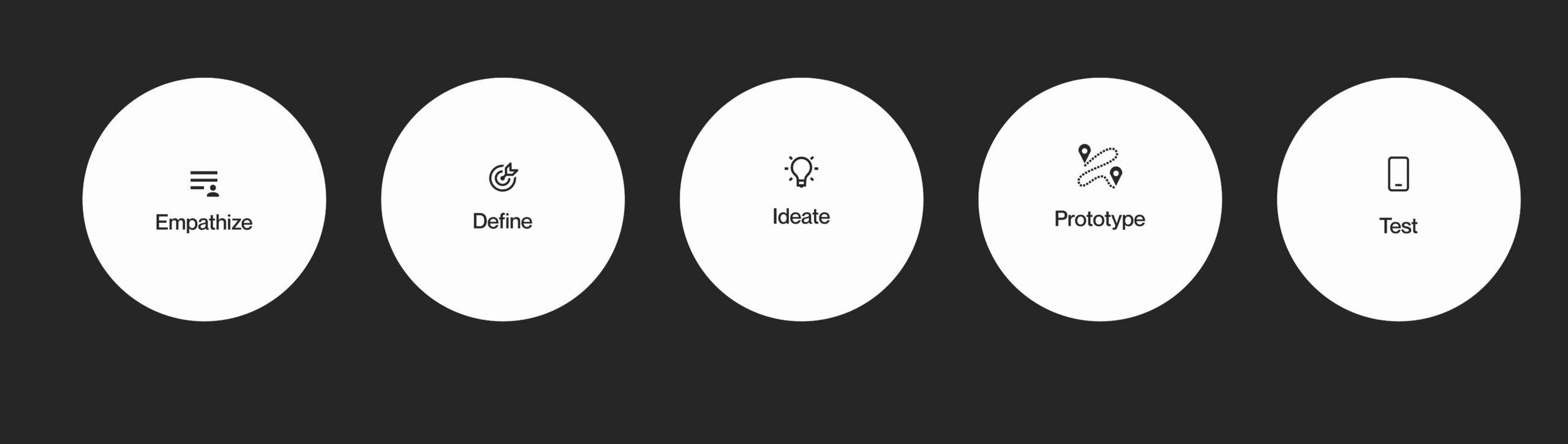
The scope of the project is to create a seamless process where users can easily hail a ride and can also send parcels or gift items to their loved ones all in one mobile app. The goal was to come up with a working solution using the design thinking process.
Problem
Statement
My role on this project as the sole product designer was to work on the UX Research and the UI Design for the entire application. I employed the Design Thinking Framework, conducted market and user research and also translated the results of my process into user friendly visual interface designs.
User Quantitative Research
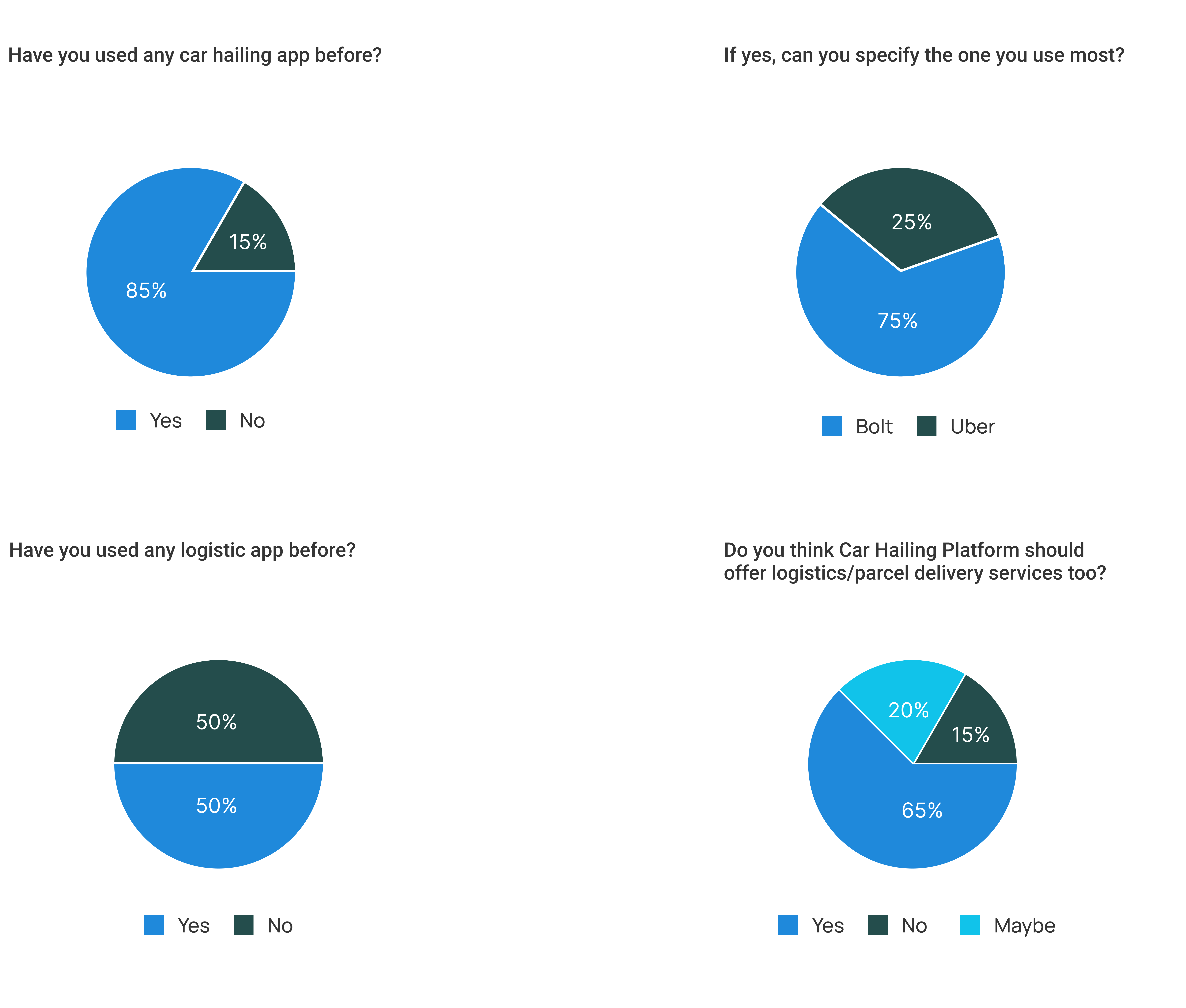
I used quantitative research methods, including interviews and surveys, to gather insights on car-hailing and logistics apps. The study focused on four key questions: participants’ past use of car-hailing apps, their most-used app, familiarity with logistics apps, and opinions on whether car-hailing platforms should expand into logistics and parcel delivery.
EMPATHY MAP
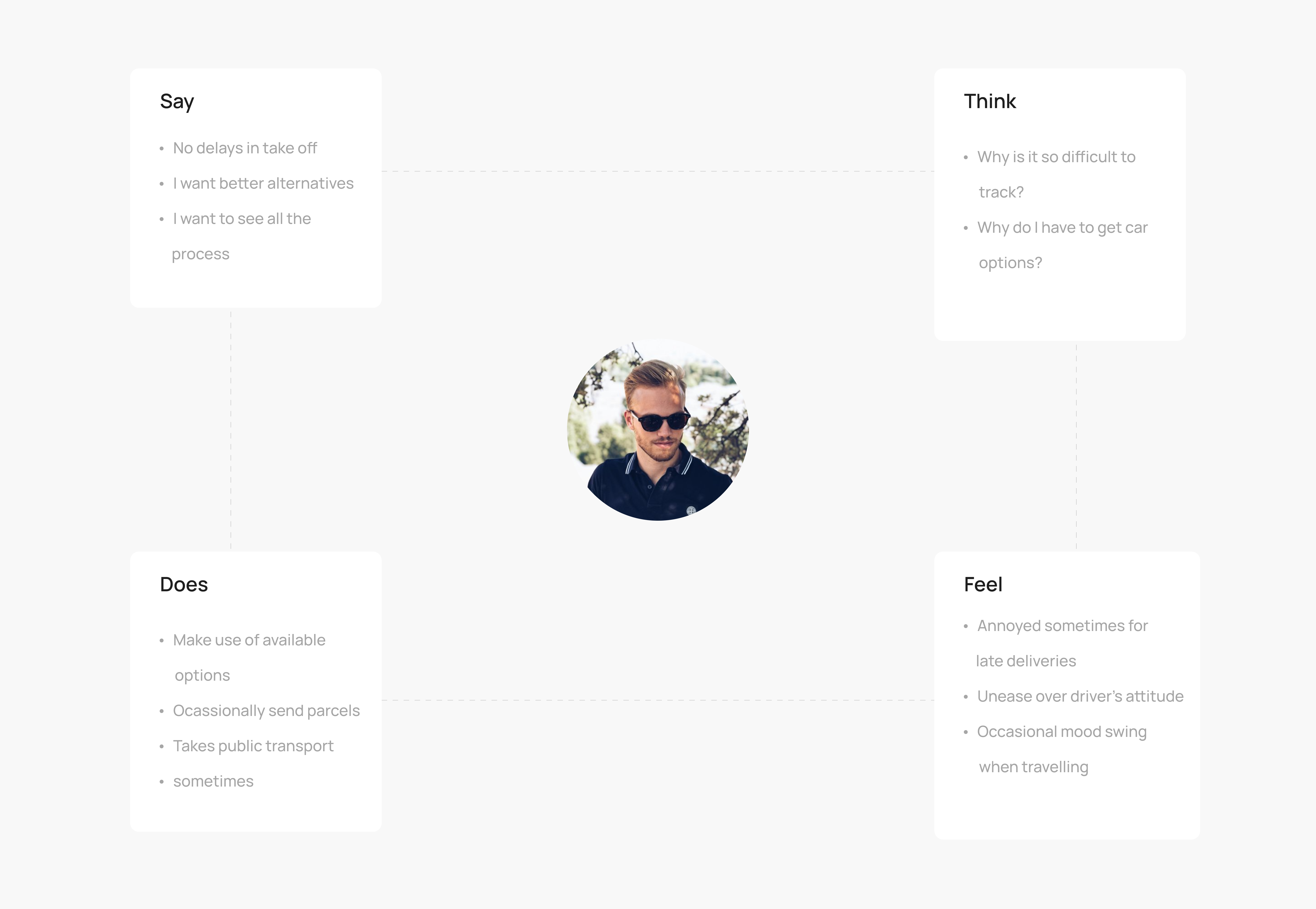
For the ride-hailing and parcel delivery project, I used an empathy map to better understand the ideal user’s perspective. This helped me explore their experiences, behaviors, thoughts, and emotions—revealing key insights to create user-centric solutions and enhance the overall experience.
How might we?
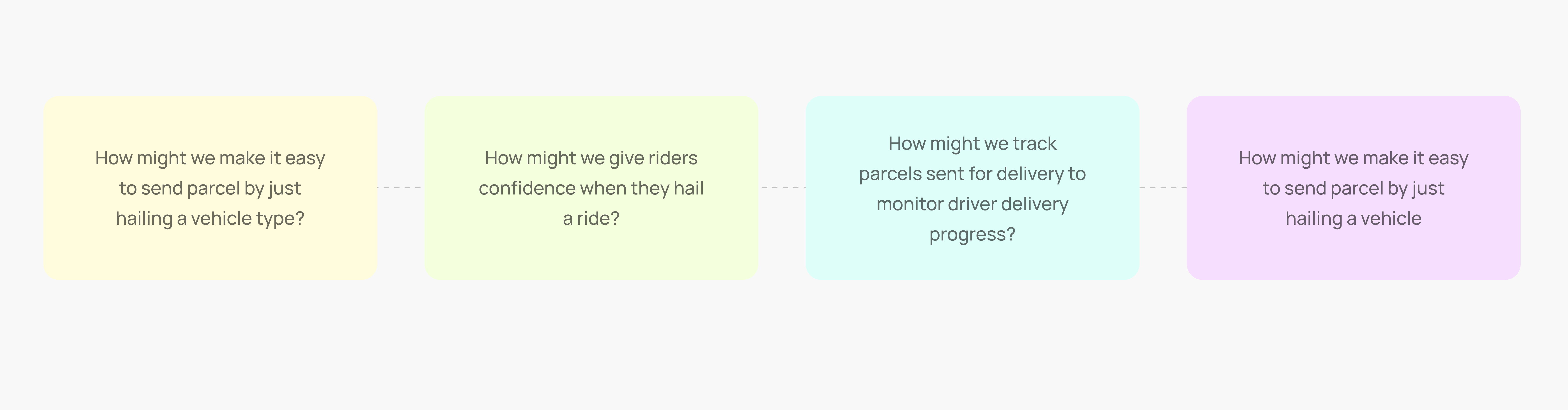
I used the "How might we" framework to clearly identify user problems and highlight the challenges they face. Framing issues this way encouraged creative thinking and made it easier to generate actionable ideas.
This approach helped me develop user-centric solutions for both ride-hailing and parcel delivery services.
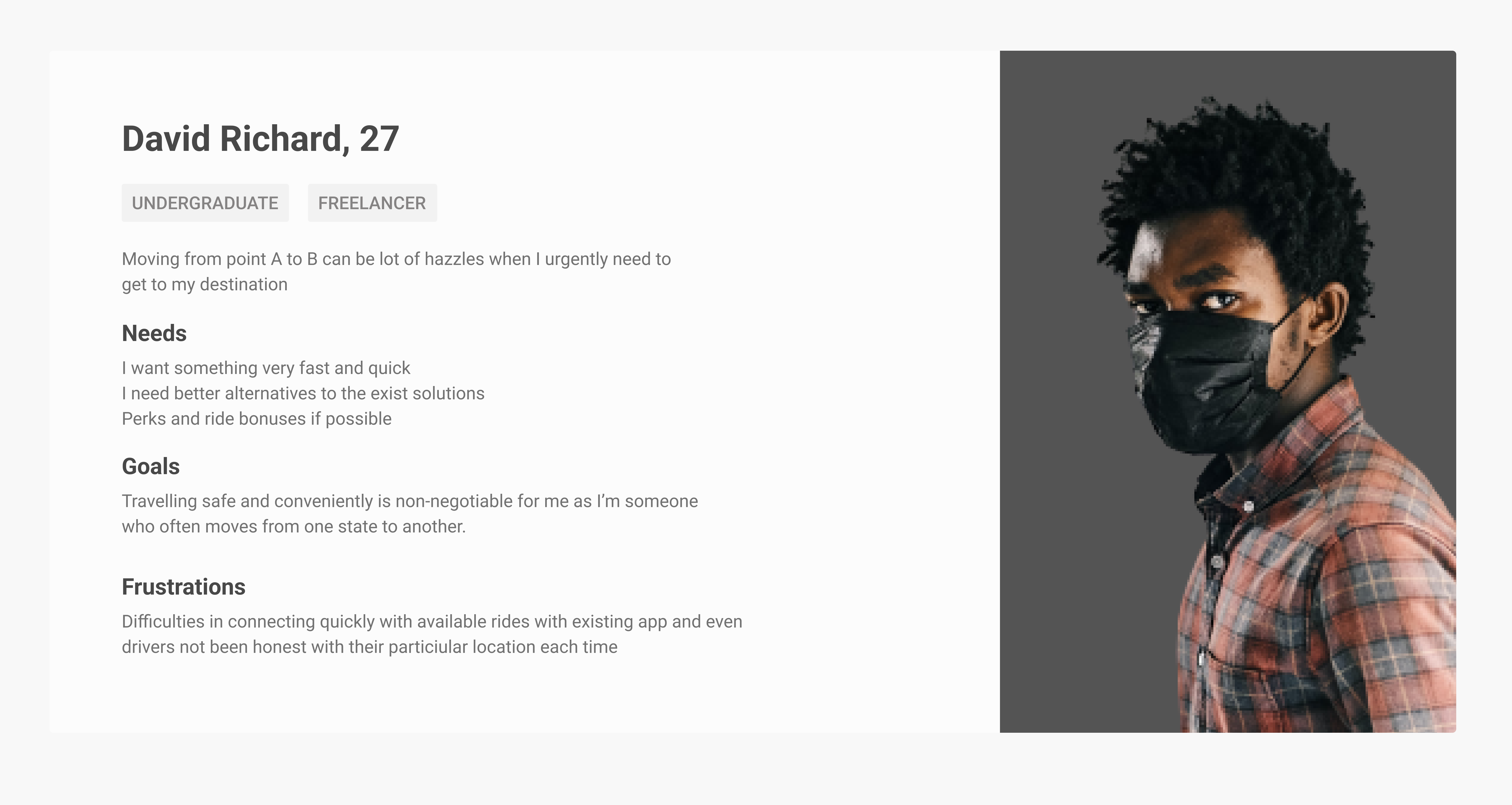
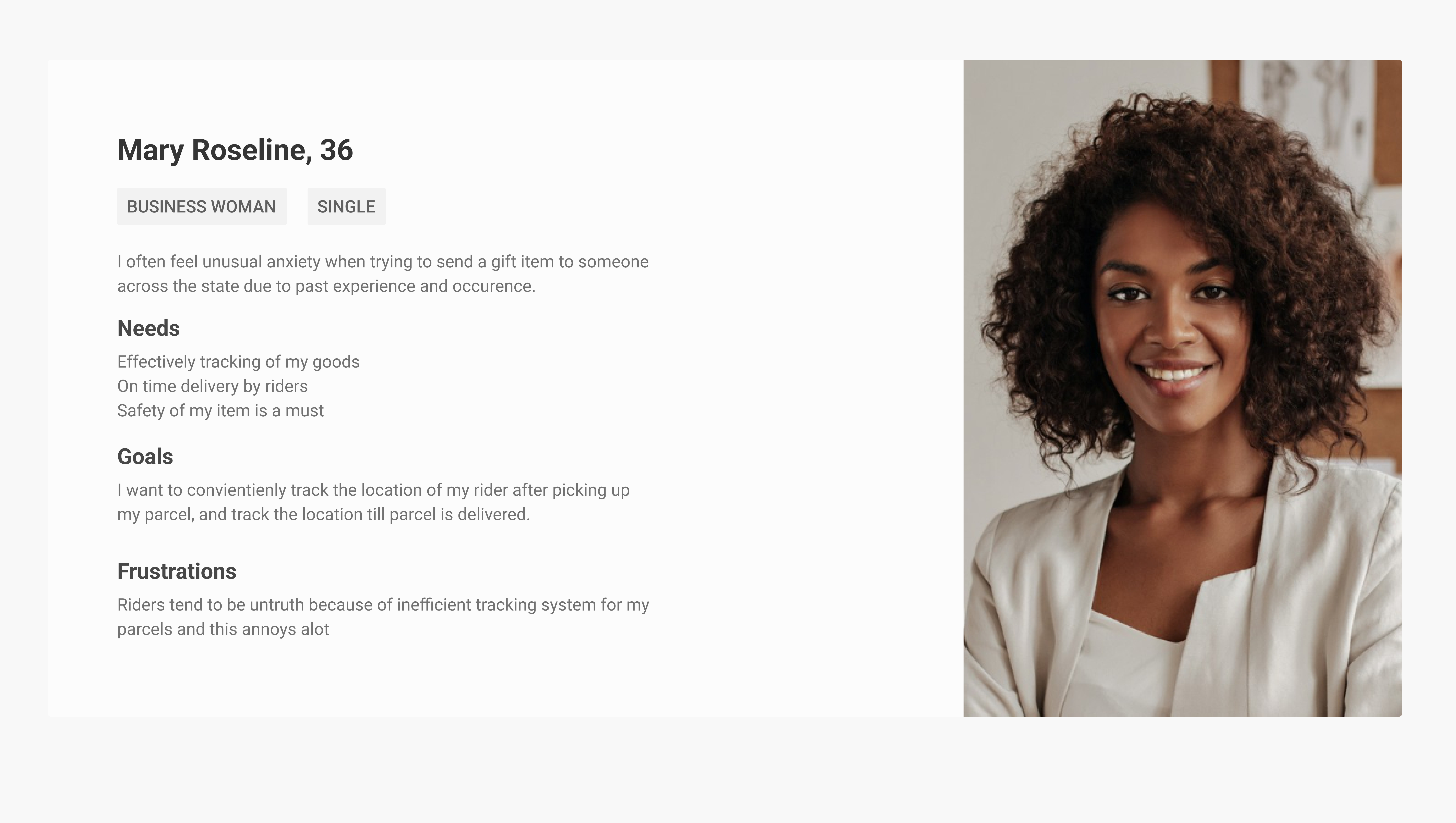
USER persona
I used user personas to better understand the needs, goals, and frustrations of different audience segments. Creating these detailed profiles helped me empathize with their unique perspectives and challenges.
These personas guided the research process, revealing key insights and opportunities to improve the overall user experience.

Information architecture
I applied information architecture to show how different parts of the app connect and work together. By organizing and structuring content clearly, I built an intuitive navigation system that supports smooth user interactions.This architecture also provided a visual map of the app’s features and workflows, making it easier for users to understand the layout and move through the app with ease.

Onboarding screens
The onboarding screen gives the users a brief of what to expect and see in the entire application.This is done to in a user friendly approach with illustrations to show each function and a little description to enlighten them.
Account setup
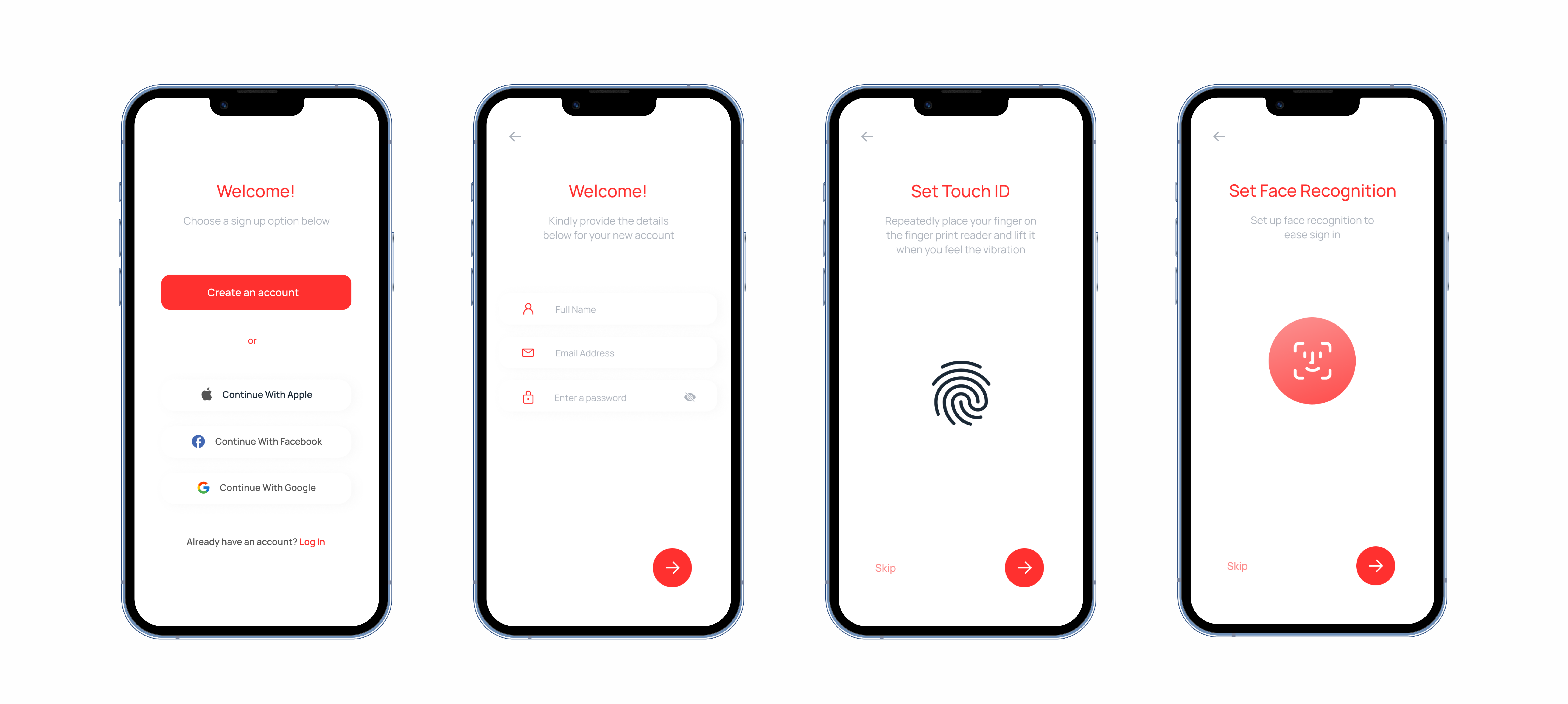
The users were provided with a smooth yet flexible way to sign up and get started with using the application. From the options to get in with their social media account, to setting up their touch ID with the faceID, too.
faceid
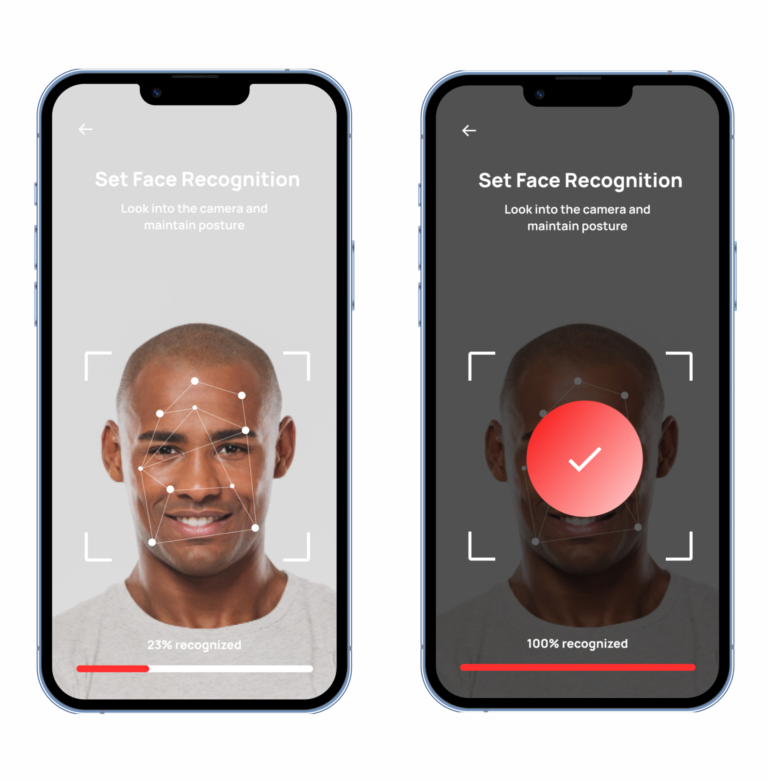
The faceID scans, captures and registers the face of the account users so as to ease login in subsequent time. This would help the users get in quickly into their account when they need to hail a ride or send parcel urgently.
Taking a ride
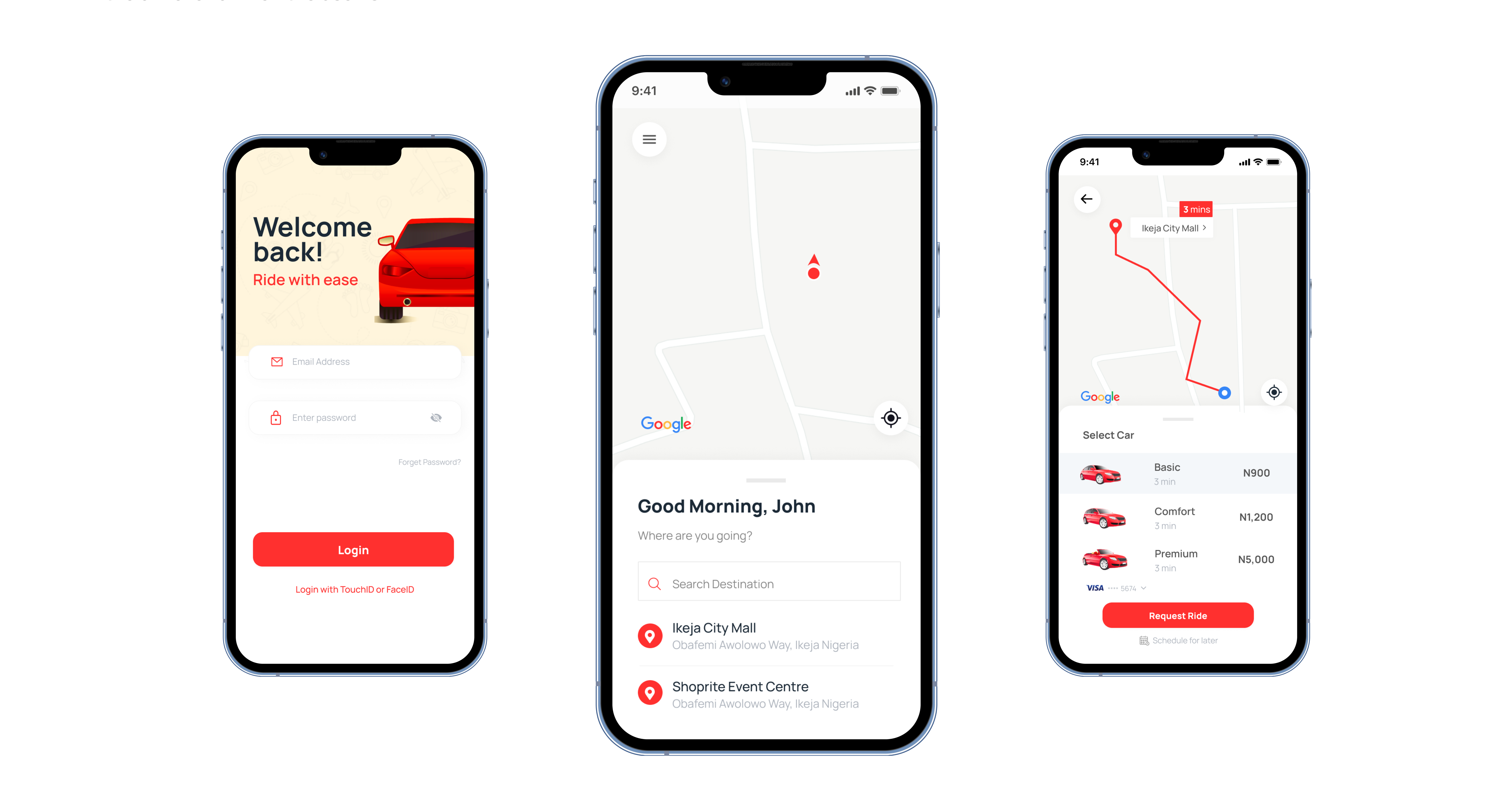
Logging into the application takes the users right to the “take a ride section”. The process allows the user to enter their destination and select from a specific range of cars with their prices. The time each car will take to arrive is also seen directly on the screen base on the distance between the driver and where the user is.
Find Cars
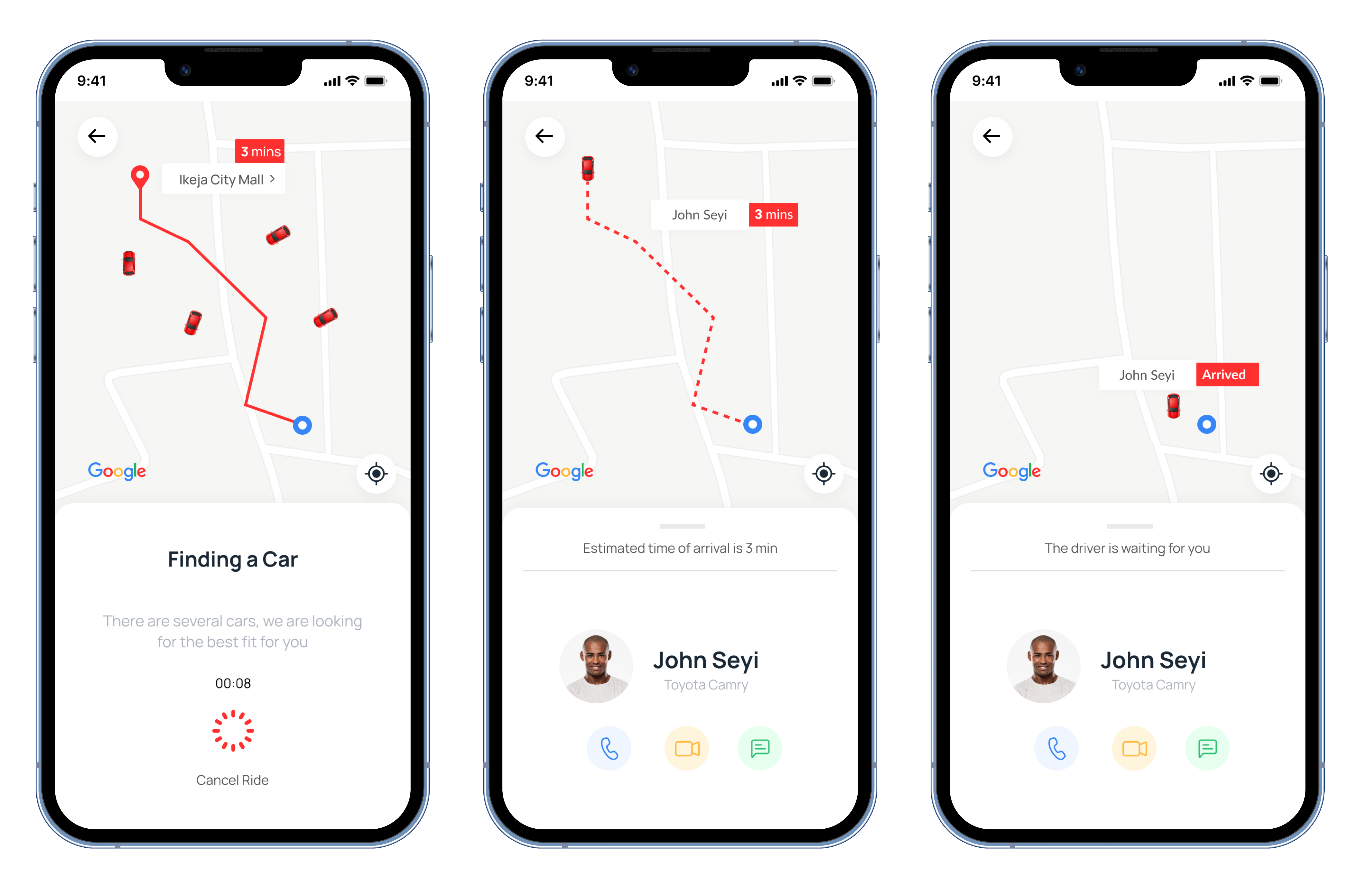
After the users enter their destination, the app will begin to look for the best and nearest driver with their present location. After a careful selection of the the driver, an estimated time of arrival is displayed for the users and users can make calls, video calls or even send a message to the driver anytime.
On Trip / Complete Ride
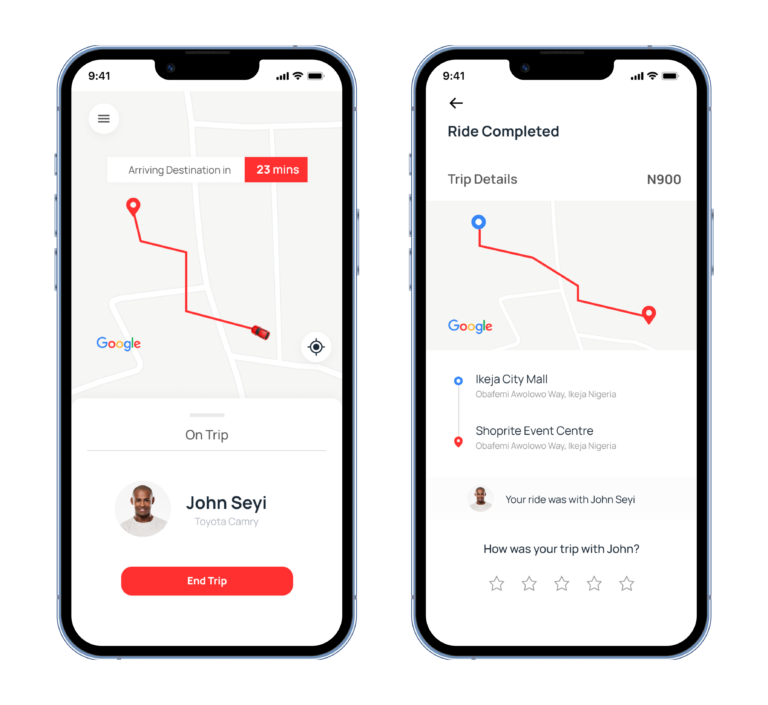
Once the trip begins, the app displays the estimated time of arrival so users know how long the ride will take. After the ride is completed, a summary of the trip is shown along with an option to rate the driver.
how it works (interactive prototype)
The interactive prototype offers a real-time feel of how the application will function, allowing the product to come to life and be tested before launch. It demonstrates how users can request a ride and move from their current location to their destination.
learnings & outcomes
As the sole product designer, I built a logistics app that lets users request rides and send parcels with ease. Through interviews and surveys, I discovered key pain points—especially the lack of unique features and real-time parcel tracking in existing apps.
This project emphasized the value of user-centered design and seamless service integration. The result is a streamlined logistics app that directly addresses user needs and improves their overall experience.